Somewhere in Belgium, Germany or the UK, a motorcycle is being rolled into a garage right now. Battery tender on, cover over the tank, see you in April.
Meanwhile, in Andalusia and the Algarve, the riding season is just getting good.
For most of northern Europe, winter means five months without a ride. In the south of Spain and Portugal, winter motorcycle riding means empty roads, soft light, mild days and some of the best riding of the year. Here’s why we think October to March is prime season, and what to expect if you come down.
The Weather: Mild, Dry and Made for Riding

Summer in the south is beautiful, but it’s hot. Inland Andalusia regularly pushes past 40°C in July and August, which isn’t much fun in full riding gear.
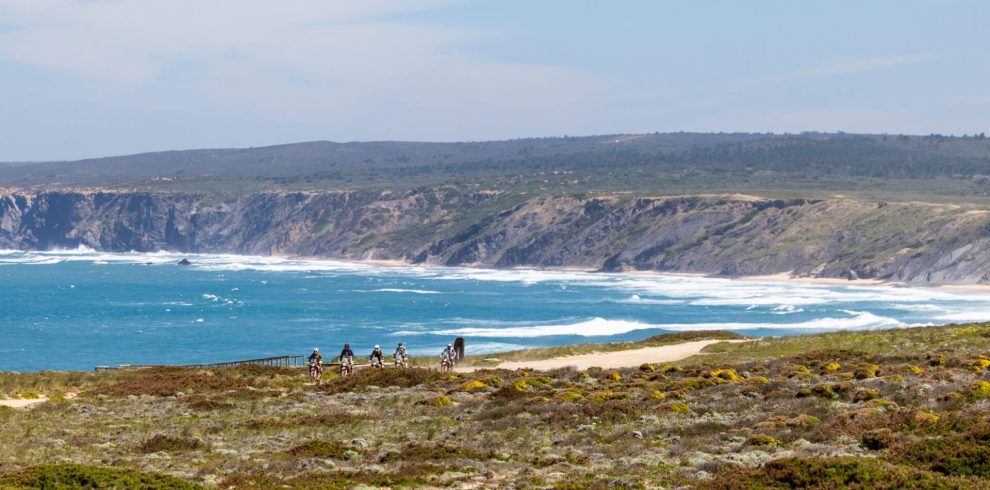
Winter is a different story. Along the coast around Almuñécar and Tavira, daytime temperatures typically sit in the mid to high teens, even in January. Sunny days are the norm, and the Algarve is one of the sunniest corners of Europe.
Mornings start fresh, so you layer up. By late morning you’re opening vents. By lunch you’re sitting on a terrace in the sun wondering why you ever stored your bike for winter.
Empty Roads and Quiet Villages

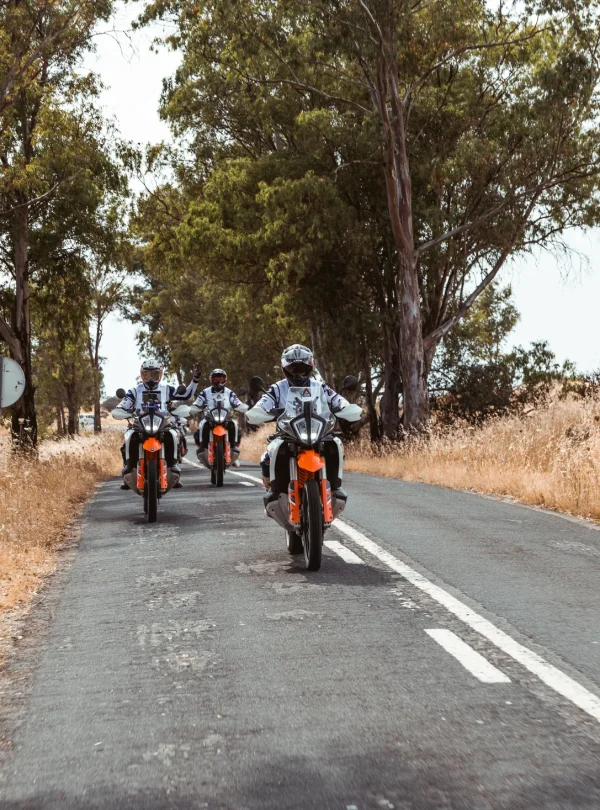
The summer crowds are gone. Coastal roads that are packed in August are quiet. Mountain passes are yours. White villages in the Alpujarras and the hills behind the Algarve go back to their own pace.
That means smoother riding, easier stops, no fighting for a table at lunch, and a much more local feel to the whole trip.
The Light and the Landscape

Winter light in the south is low and golden, which is great for photos. After the first autumn rains, the hills turn green again. Almond trees start blossoming in late January and February. On clear days the snow-capped peaks of the Sierra Nevada stand behind the coastline, and you can ride from the sea toward the snow in about an hour.
What Winter Motorcycle Riding Down South Really Asks of You
We won’t pretend it’s summer. A few honest notes:
Temperature changes. It can be 18°C on the coast and close to freezing on a mountain pass the same day. Layering is key: a good thermal base layer, a windproof mid layer and heated grips or gloves if you have them. Our gear essentials guide covers what to bring.
Shorter days. Daylight runs out earlier, so tour days start a bit earlier and finish before dark. We plan routes around that.
Rain happens. Winter showers tend to come through in short bursts rather than long grey weeks. If you do get caught, our guide to riding in the rain will help.
Cold, damp shade. High passes and shaded corners can stay cold and slippery in the morning. Our guides know which roads to save for the afternoon. More tips are in our mountain riding guide.
Which Tours Work Best in Winter?

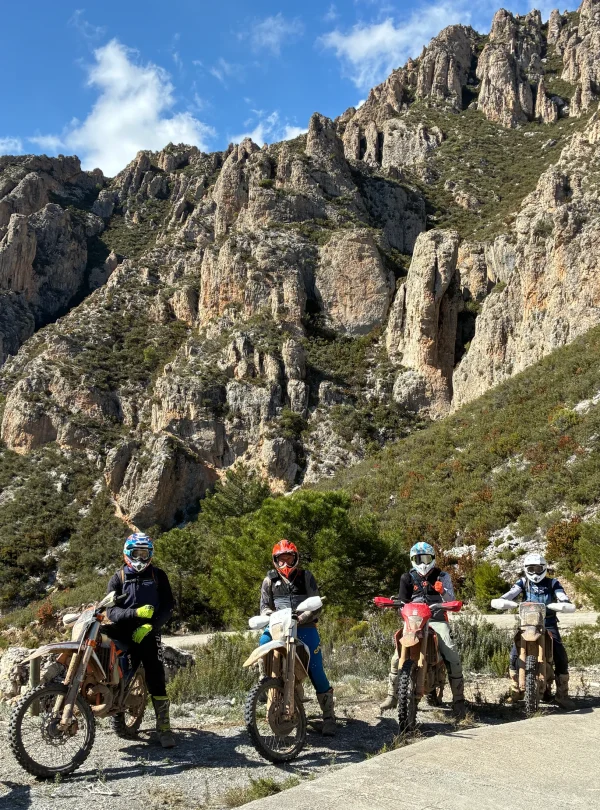
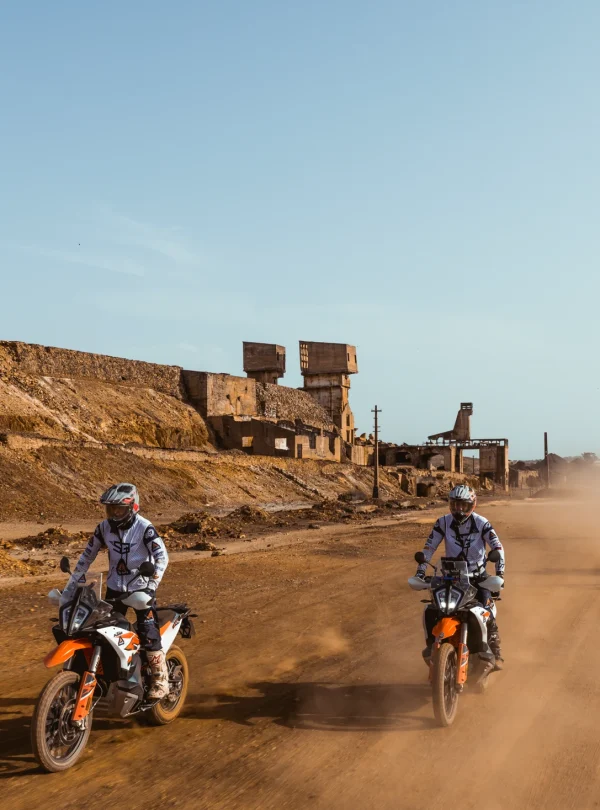
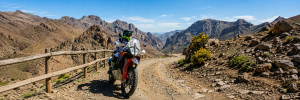
Our coastal and lower-altitude routes in Andalusia and the Algarve are ideal from October to March. Enduro riding in Andalusia is great too, because the trails are firmer and dustier than in summer, and you’re not cooking in your gear.
Our Spain to Portugal tours link both bases, Almuñécar and Tavira, and mix mountain roads with coastal stretches.
Every route can be adapted to the group’s level, so whether you’re an experienced adventure rider or new to touring, we’ll match the pace to you.
Why a Guided Winter Tour Makes Sense
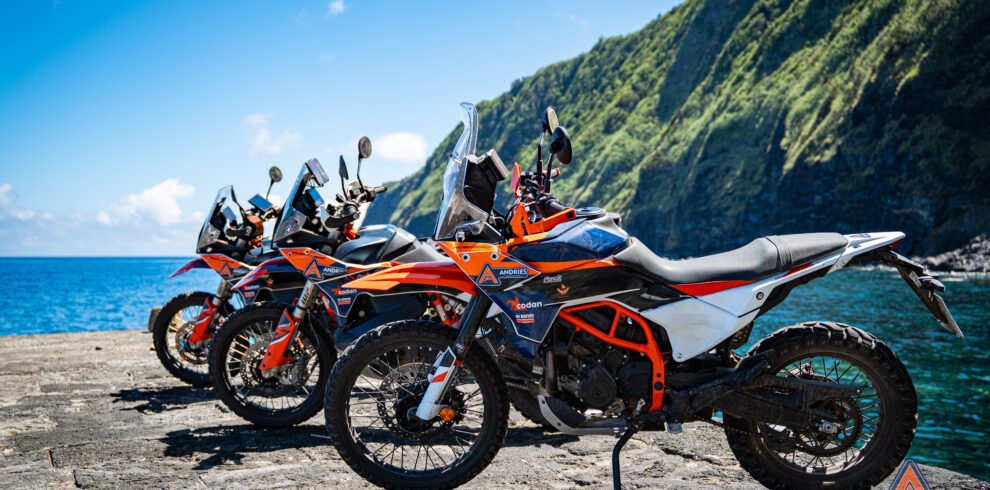
Winter motorcycle riding rewards local knowledge: which pass is clear, where the sun hits first, which village has a fire going at lunch. That’s exactly what a guide brings. Add prepped bikes waiting for you at the base (have a look at the motorcycles behind every tour) and you can fly in with your gear and ride.
Don’t Put Your Riding Season on Hold
A flight is all that stands between a garage full of covered bikes and sunny mountain roads in Spain and Portugal. Winter isn’t the off season down here. It’s one of the best times to ride. Get in touch and we’ll help you plan your winter escape.